
Construction work at Pinnacle Dr. and Clayburne St. through Dec. 11
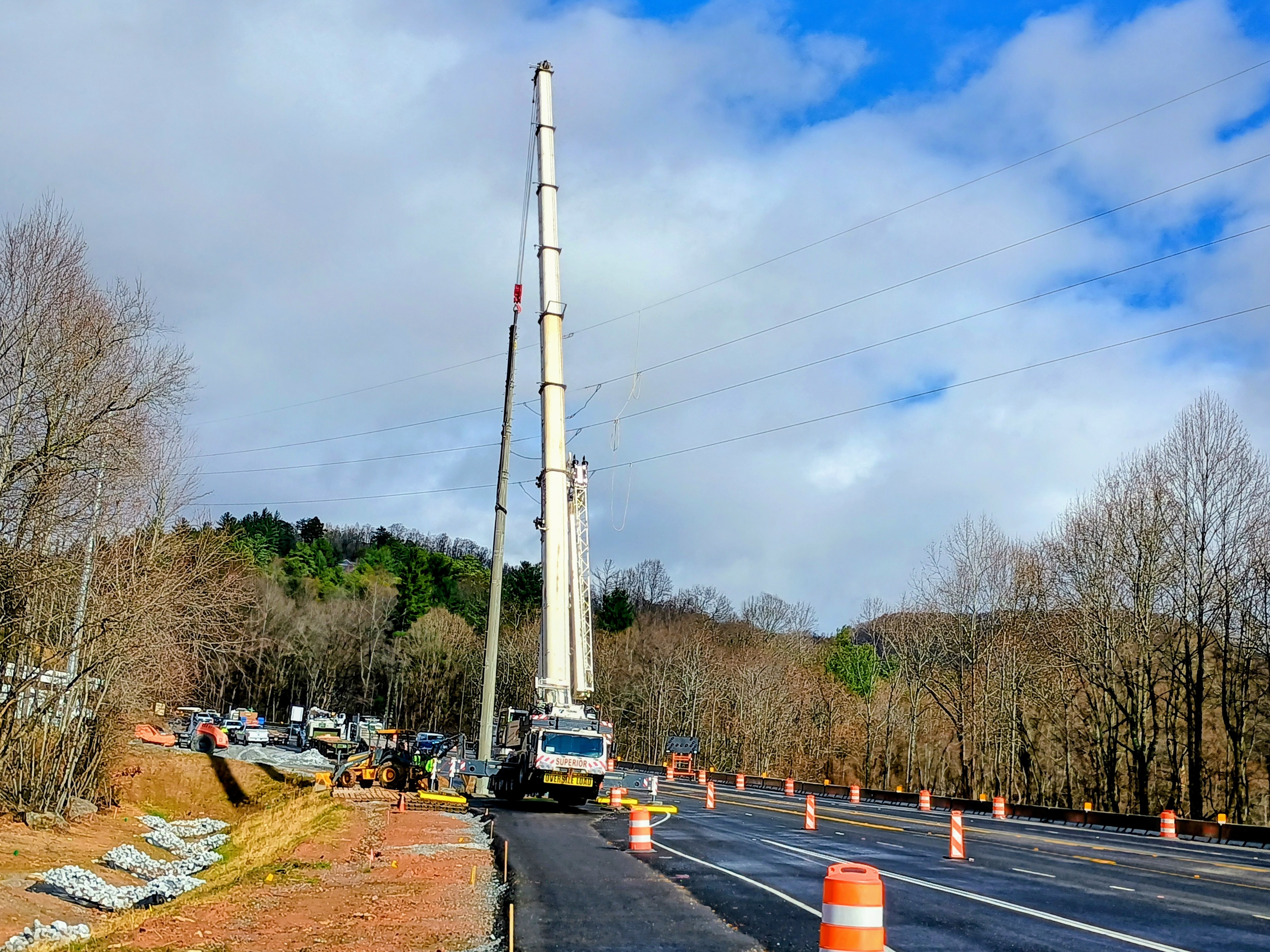
Motorists should expect intermittent traffic delays on Highway 441 North in Clayton at Pinnacle Drive and Clayburne Street from now through Dec. 11, as Georgia Power Transmission will begin work setting new power poles, removing existing poles and installing new overhead wires.
A crane will be on site for lifting and pole placement.
The construction work is happening on Highway 441 North just past the Georgia Mountain Market, which is now owned by MedLink Georgia, in Clayton on the southbound side. Motorists will notice orange cones, signage and equipment in the area.
The Georgia Department of Transportation (GDOT) published a press release Tuesday saying delays were expected starting Dec. 1 and the work is part of Phase II of the Highway 441 widening project.
“Crews met with GDOT and Vertical Earth on site this week to coordinate the work and traffic impacts,” according to the press release.
The project is weather-permitting and Georgia Power has access to the crane through Thursday, Dec. 18. However, work at the location is expected to be completed by Thursday, Dec. 11, barring weather delays, according to the press release.
According to GDOT, the presence of a crane and heavy equipment will require intermittent traffic disruptions in the immediate area.
“GDOT has asked Georgia Power to minimize lane closures and limit stoppages to keep traffic flowing and avoid the large backups recently experienced along the corridor,” according to the press release.
Drivers should expect occasional stopped traffic, slower movement through the work zone, and flagging operations directing vehicles when needed.
“We encourage everyone to be patient,” Rabun County Sheriff Mark Gerrells told The Clayton Tribune Tuesday, about those traveling in the area. He said motorists should plan to leave for their destinations a little earlier to account for traffic delays.
“Motorists are urged to use caution, follow posted signs, and obey flaggers while traveling through the area,” according to GDOT officials. “GDOT appreciates the public’s patience as utility relocation continues for the 441 Phase II widening project.”
GDOT officials noted that exact dates might change due to weather or other factors.
“Motorists are cautioned to reduce their speed while traveling through work zones, stay alert, and watch for workers,” according to the press release.
Visit https://511ga.org/, call 511or download the Georgia 511 app to get real-time information on work status and traffic conditions.
Highway 441 widening phases
The widening of Highway 441 in Rabun County is scheduled in three phases.
Jason Dykes, district engineer for GDOT District 1, discussed the project during a September Rotary Club of Clayton meeting.
Phase I of the project is planned from Kelly’s Creek Road in Rabun Gap to the North Carolina state line. It has an estimated completion date of October 2027 and its estimated cost is $57 million.
Phase II of the project is planned from Pinnacle Drive in Clayton to Cathey Road in Mountain City. It has an estimated completion date of October 2028 and its estimated cost is $90 million.
Dykes said Phase I and Phase II are concurrent.
In November, motorists experienced traffic delays as new bridge beams for Betty’s Creek Bridge were set as part of Phase I. The bridge is located on Highway 441 (Ga. 15) at the cross-street of Henry Dillard Street, crossing Betty’s Creek, in Dillard. The construction of the new bridge over Betty’s Creek is expected to enhance safety and mobility, according to GDOT officials.
Phase III is planned from Cathey Road in Mountain City to Kelly’s Creek Road in Rabun Gap. It is slated to be funded in 2028 and is likely a two-year project.
Safety in medians
Dykes said GDOT prioritizes safety. He said the widening will create four lanes on a median-divided highway.
“A lot of work goes into design and engineering,” Dykes told Rotarians in September.
In his presentation in September, Dyles explained adding a median to a highway “significantly improves safety for both driver and pedestrians, enhances traffic flow, and can offer aesthetic and environmental benefits.”
By physically separating opposing lanes of traffic, medians prevent or reduce the risk of dangerous head-on collisions. They can also lower overall crash rates.
“Data from the Federal Highway Administration shows that divided highways have substantially lower crash rates than undivided ones. One study found that total crash rates on divided highways were 42 percent,” according to Dyke’s slideshow presentation.
Medians also help protect pedestrians by allowing them to cross multi-lane roads one direction at a time. This reduces the distance and time they must spend in the roadway, making crossings safer.
Medians can help improve traffic flow by reducing bottlenecks and delays for through-traffic. In addition, the streamlining of traffic movement and access control can increase a roadway’s capacity by more than 30 percent.
Medians also reduce the number of conflict points, limiting vehicles to right-in and right-out turns in many areas. This prevents drivers from making unsafe left turns across multiple lanes of oncoming traffic.
In addition, the presence of a median can create the perception of a narrower roadway, which encourages drivers to reduce their speed.