

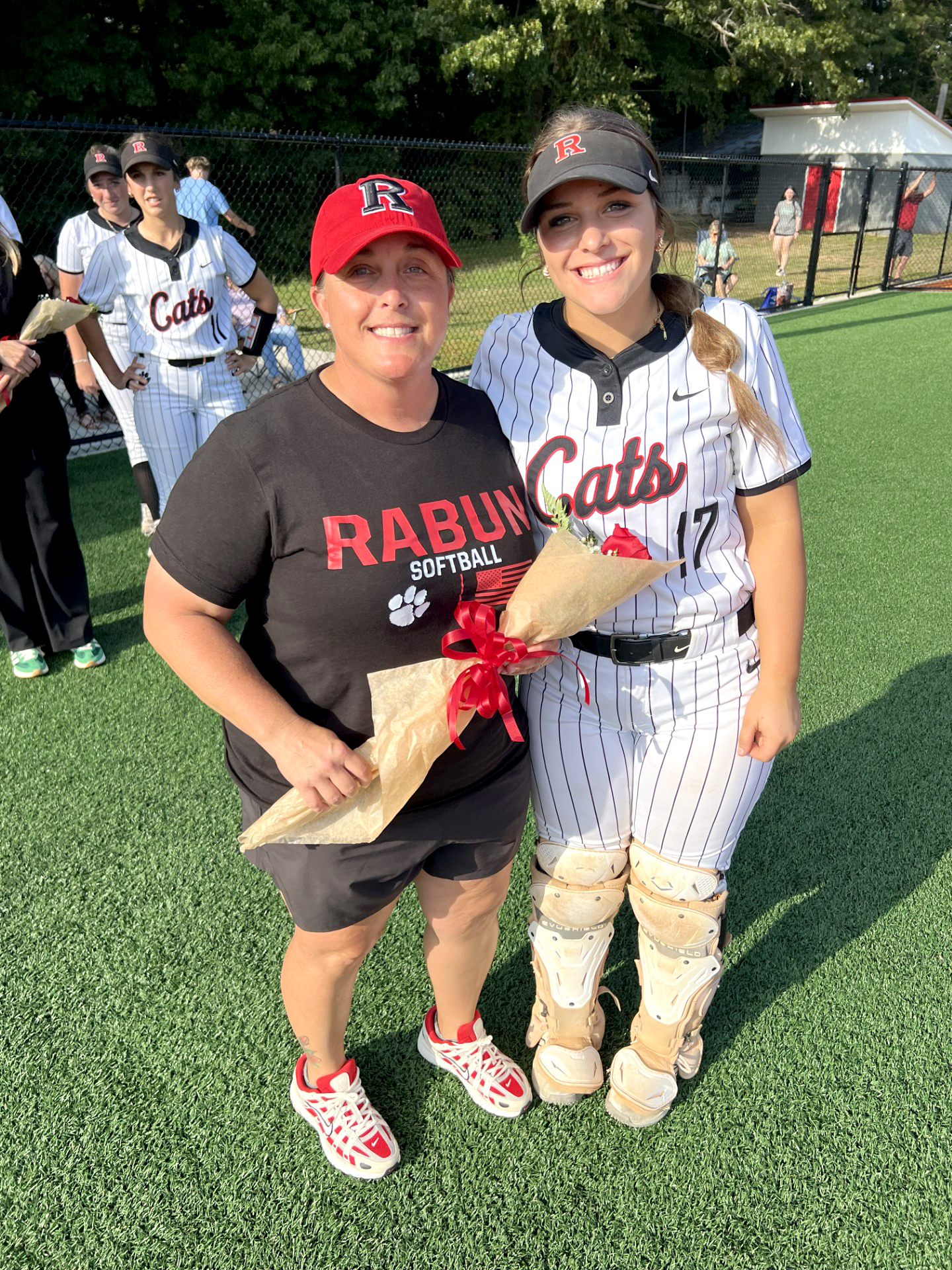
Submitted Photo. Rabun County head softball coach Jessica Evans (left) poses with her daughter and Wildcat catcher sophomore River Evans before a game this season.
Sports and family are intertwined throughout life. Teams, schools and programs are considered family and relationships between players can reflect that of siblings.
Coaches, the leader of the team or “family,” symbolize the role of a mother or father. At times, they not only represent the presence of a mother or father figure, they actually are the mother or father to members of the team.
This school year and fall sports season, all three schools in the area – Tallulah Falls School, Rabun County High School and Rabun Gap-Nacoochee School – are representations of that.
In total, there are six teams this fall season where the head coach is a parent to one of the members of the team. There are several more in Rabun County at the junior varsity and middle school levels as well.
Of those six varsity teams mentioned, three come from Rabun Gap, two from Rabun County and one from Tallulah Falls. Each of which represents a different fall sport, ranging from football to tennis.
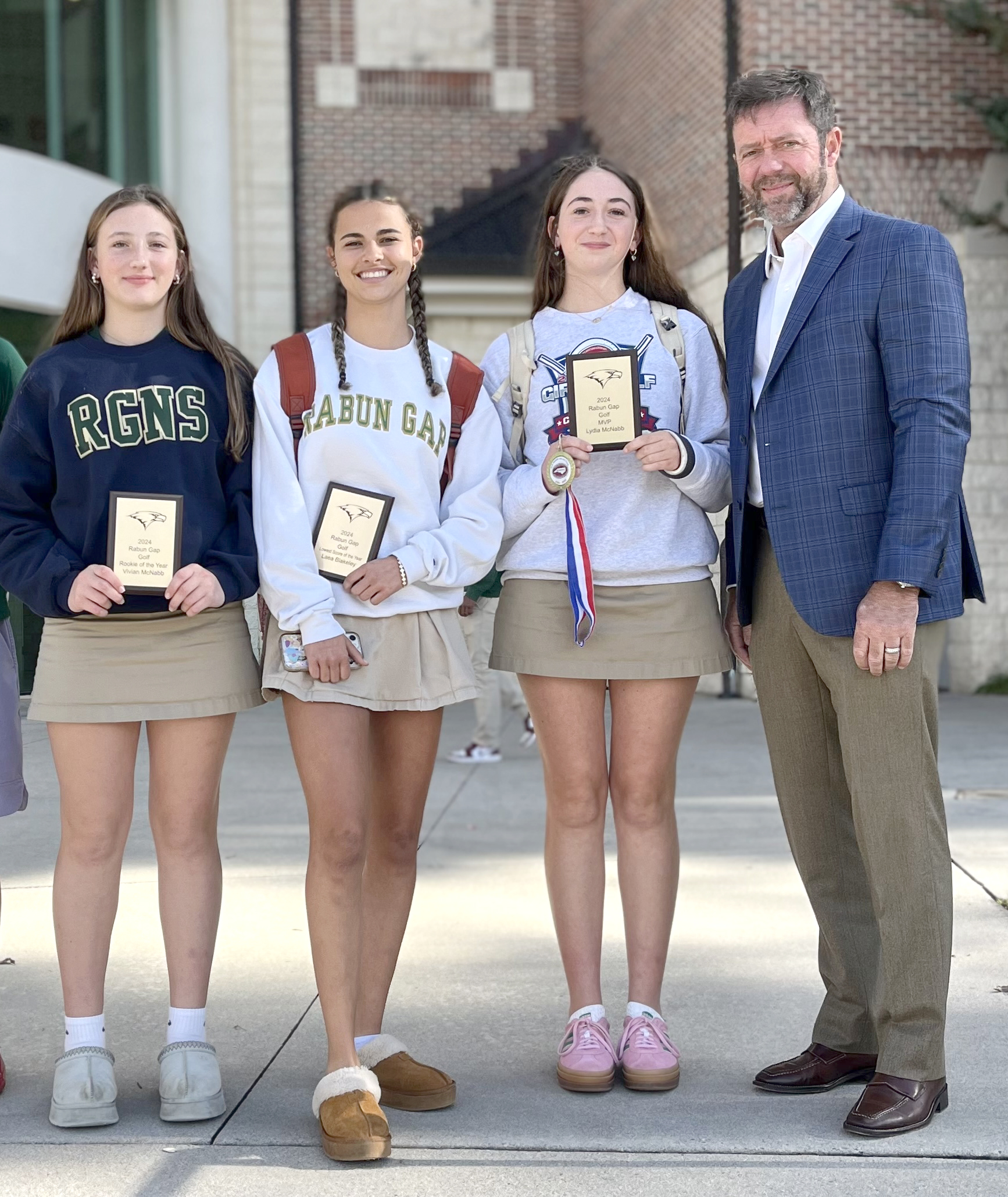
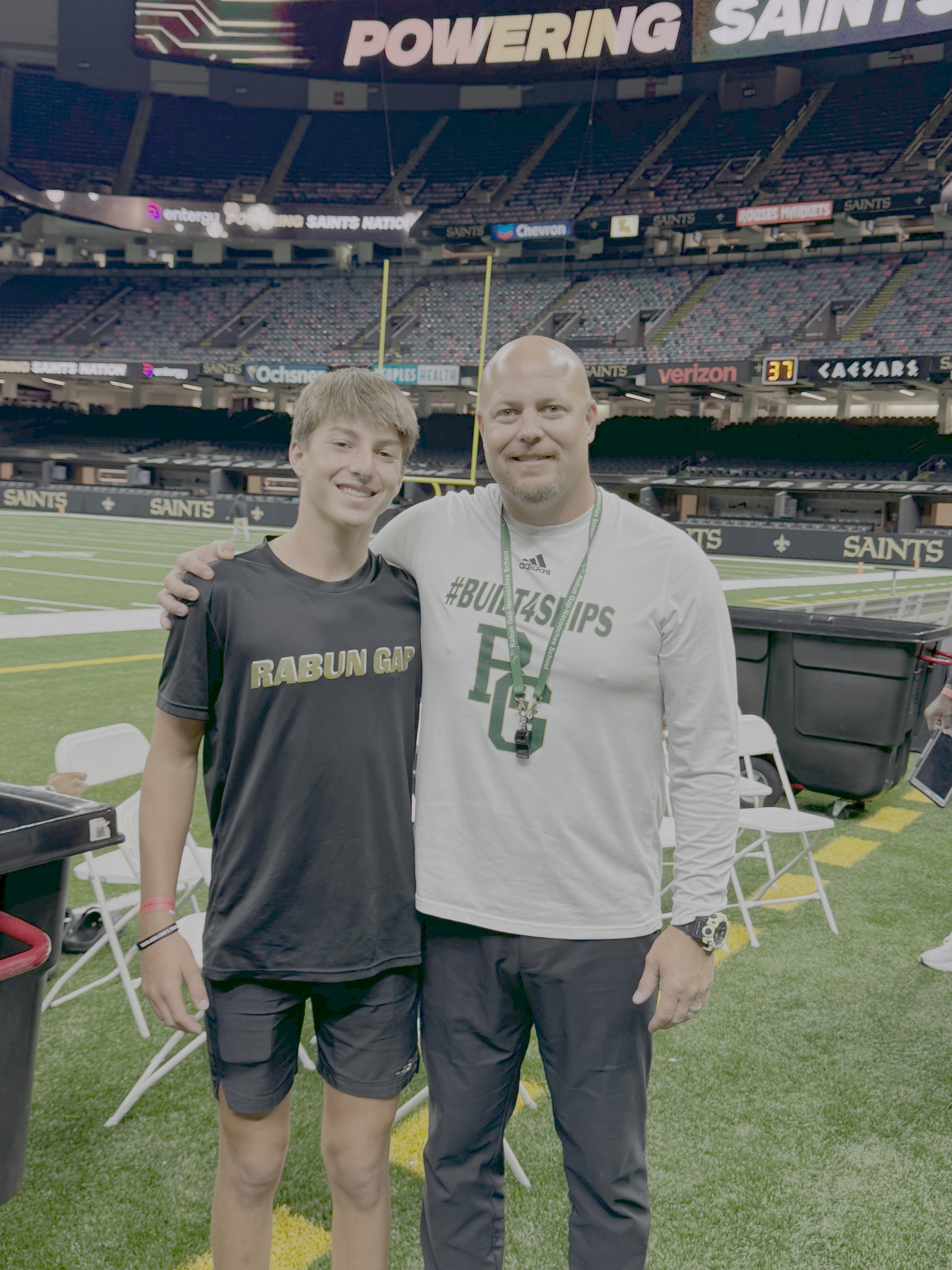
At Rabun Gap, the girls tennis team is led by Esteban Karplus and his daughter, Ruby; the football team is coached by Derek White, whose son Asa is a freshman on the team; the Eagles’ girls golf team is coached by Lawrence McNabb whose daughters, Lydia and Vivian, are on the team.
Further, several assistant coaches on the football team have a son on the roster and the mother of girls golf senior Laea Blakeley, Leiza Munn Blakeley, previously served as the girls golf assistant coach.
For Rabun County, the Wildcats’ softball team is coached by Jessica Evans, her daughter River is a sophomore shortstop/catcher on the team. Leading Rabun County’s cheer squad is head coach Cristina Weber. Weber’s daughter, Bailey is one of the team captains along with the coach’s niece, Ella. Weber’s oldest daughter, Jayce, cheered for the Wildcats from 2018-2022.
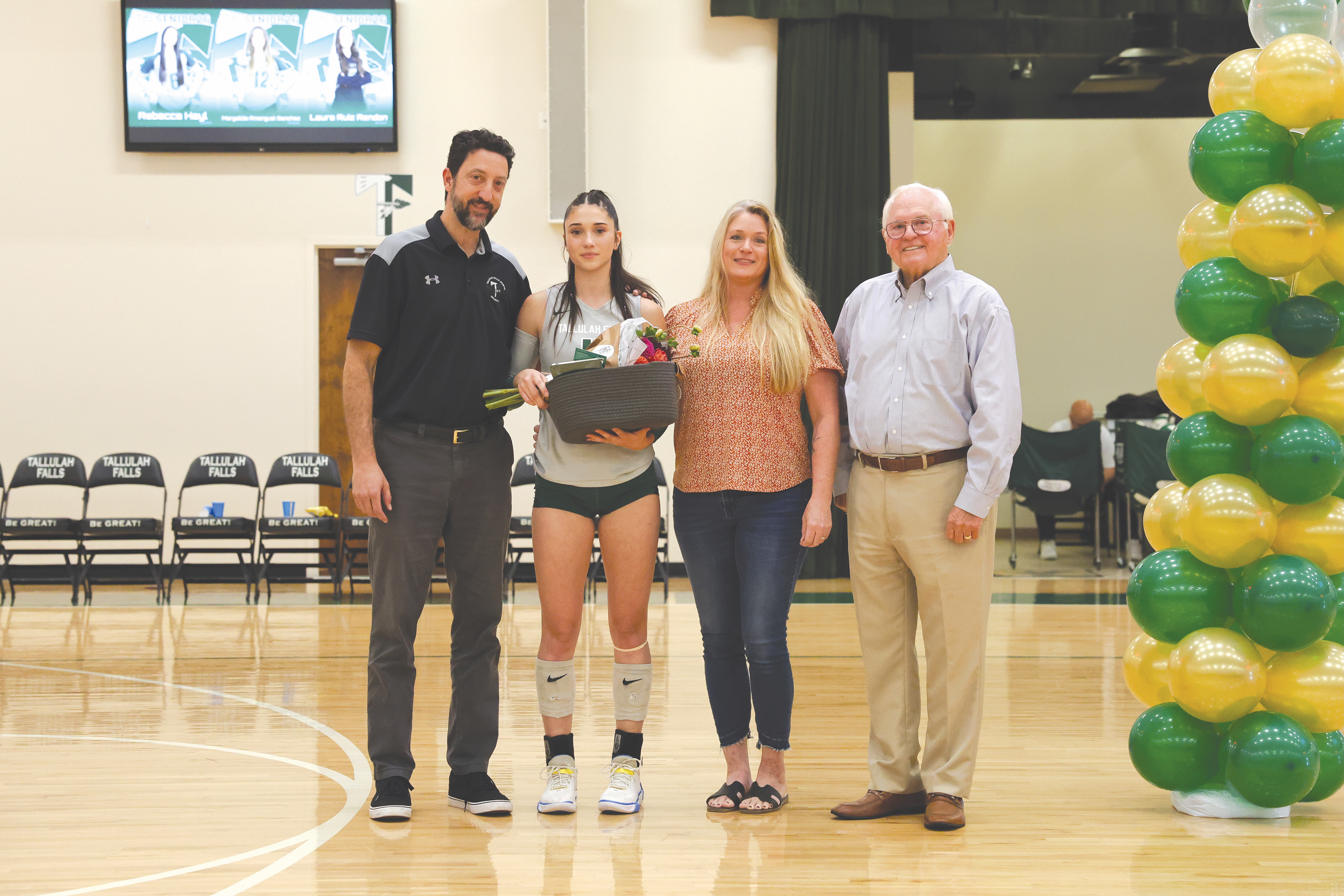
Tallulah Falls School’s varsity volleyball program is coached by Matt Heyl, who recently hit 200 career wins and has led the Lady Indians to a state championship in 2023 and several deep playoff runs. His daughter Rebecca, who goes by Becca, is one of the senior leaders on the team.
The presence of parents in the coaching realm at the high school level isn’t new to Rabun County. In fact, many parents in the area – regardless of if they are a high school coach or not – started out coaching their children in recreation leagues.
That family connection and influence is part of what makes Rabun County, Rabun County.
“I think it’s a huge impact for our community and the specialness that comes with that,” Rabun County Schools Superintendent Steven Cole, who coached his daughter Abby in travel softball, told The Clayton Tribune. “You know, you don’t find that in a lot of areas, especially in areas where there’s more movement and people moving in and out and coming out of different districts or different areas.”
While there is a certain specialness of having coaches with offspring as players, there can be challenges within parents coaching their children. One of those is finding the balance between the parent-child and player-coach relationships.
In a study by Weiss and Fretwell, six boys in a U–12 competitive soccer league were interviewed, along with their fathers who served as their head coach, and their teammates. The interviews were conducted to find positive and negative aspects about playing for their dad.
One of the negative aspects of coaching their son that the fathers in the study identified, was the difficulty of separating the role of “coach” from the role of being a parent.
Knowing when to wear the coaching hat and when to leave it on the playing field can impact both relationships, and the overall experience in sports for athletes.
Some coaches in the Rabun County area had the same sentiment in regards to balancing when to wear the right hat. The coach hat stays on when on the playing surface and at school, and the “mom or dad hat” replaces it when they depart for home.
But sometimes that transition isn’t as seamless as it sounds. It takes time and hard conversations.
For Rabun County softball head coach Jessica Evans and her daughter River, they sat down and had that conversation last summer. They talked through the relationship to set boundaries and understand that “it’s not just mom coaching her, but it’s a coach.”
“I think having that relationship of ‘OK, on the field, its coach. When we get out of this gate and leave the locker rooms, it’s mom,’” Evans said of balancing the two relationships with her daughter, who is a sophomore on the team. “Our biggest time that we discussed was that if there was something tough that happened that day, we wouldn’t discuss it on the car ride home. But maybe we’d wait until the next day.”
In the same study by Weiss and Fretwell, the boys interviewed in the study identified two of the negative aspects of being coached by their dad as feeling pressure and higher expectations than other players, and the perception that the coach’s son receives differential treatment from other players.
The athletes interviewed also felt that the head coach – their parent – was harder on them than other players. But they cited that style of coaching as understanding the higher expectations their parents had for them, and their personal desires to eliminate the belief of receiving special treatment for being the coach’s child.
“I do,” said Tallulah Falls School volleyball senior Becca Heyl of if she puts more pressure on herself as the head coach’s child. “I mean, I honestly sometimes feel pressure from a new team that doesn’t know me, that thinks I might just be getting playing time because I’m the coach’s daughter, but I think that’s what pushes me to try and be the best that I can.”
Heyl’s father, Matt, has coached the student-athlete at Tallulah Falls for four years and has led the program to over 200 wins and a state championship as the head coach. The Indians recently secured their third region title in program history on Sept. 23, when they defeated Loganville Christian.
While being the child of a head coach, or coaching your own children comes with its challenges, there are also plenty of positives that both sides pointed out and research supports.
Both the players and coaches interviewed by Weiss and Fretwell had at least one positive aspect in common. That aspect was the opportunity to spend quality time with each other.
A result of getting to spend that quality time with each other, is creating lasting memories through the world of sports. Whether it was being in the presence of each other in a big moment, or just having the chance to observe, the coaches and players each had a story to tell.
For Rabun Gap girl golf’s Lydia McNabb, her favorite memory of being coached by her dad, Lawrence, comes from being together in one of those big moments.
“I think I got my first birdie (which) was at state that year,” McNabb said. “And my dad was walking alongside me and he was just kind of like, smiling, and I just kind of felt like that sense of accomplishment.”
Rabun Gap head football coach Derek White doesn’t often get the chance to truly watch his son Asa, a freshman on the team, without bearing the responsibilities of being the head coach. But during a preseason scrimmage this year, he took the opportunity to do exactly that.
Sit back as a parent and just watch, without wearing the coach’s headset and the responsibilities that come with it.
“We went to a scrimmage and the last 10 plays were the young guys and I told all the staff, ‘I don’t do this a whole lot. Here’s my headset. I’m going over here, and I’m just gonna watch,’” White said of watching his son Asa during the Eagles’ scrimmage. “I don’t want to coach, I don’t want to talk, I want to watch. That was the first time I got to do that.”